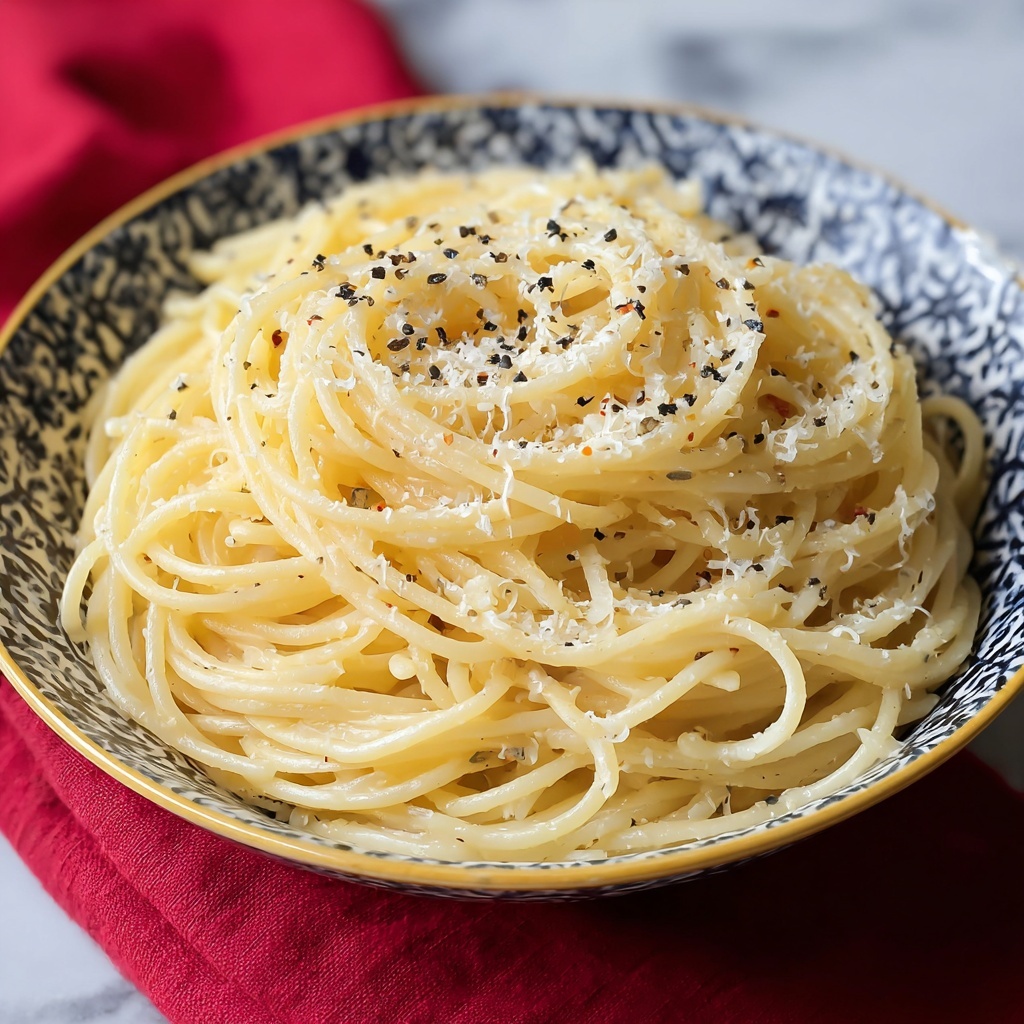
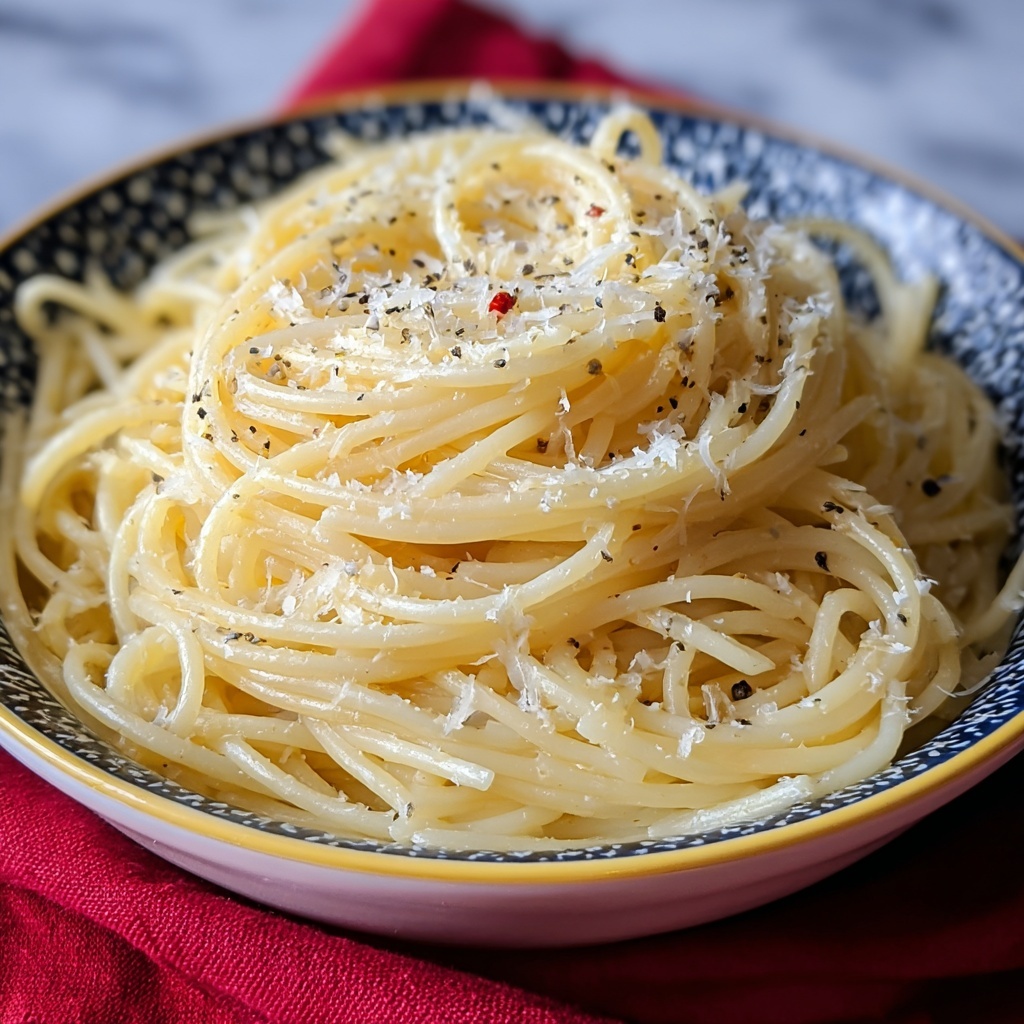
If you’re looking for a pasta dish that’s deceptively simple yet incredibly flavorful, this Spaghetti Cacio e Pepe Recipe is a total game changer. It’s the perfect blend of al dente spaghetti, sharp Pecorino Romano cheese, and the bright, biting kick of freshly ground black pepper. This classic Roman dish delivers a creamy, comforting experience with just a few key ingredients, making it an absolute favorite to whip up when you want something quick but memorable.
Ingredients You’ll Need
Every ingredient in this Spaghetti Cacio e Pepe Recipe plays a vital role, proving that simplicity truly shines in classic Italian cooking. Each component adds either a burst of flavor, texture, or richness that turns ordinary pasta into something extraordinary.
- 12 oz spaghetti: Choose a good-quality spaghetti; it holds the sauce beautifully without becoming mushy.
- 1 cup Pecorino Romano cheese, finely grated: This sharp, salty cheese is the backbone of the dish’s creamy texture and punchy flavor.
- 1 ½ tsp freshly ground black pepper: Freshly ground is key, as it offers an intense aroma and spicy warmth that defines the recipe.
- 1 tbsp unsalted butter (optional): Adds extra silkiness and balances the pepper’s heat if you prefer a softer edge.
- Salt, for boiling water: Essential for seasoning the pasta from within and enhancing the overall flavor.
How to Make Spaghetti Cacio e Pepe Recipe
Step 1: Cook the Pasta
Start by bringing a large pot of salted water to a rolling boil. This step is important because it’s your only chance to properly season the pasta itself. Cook the spaghetti just shy of al dente, about one minute less than what the package suggests. This ensures it will finish cooking perfectly when tossed in the sauce. Don’t forget to reserve a full cup of the starchy pasta water before draining—it’s absolutely crucial for creating the silky sauce!
Step 2: Toast the Pepper
While your pasta is cooking, grab a large skillet and toast the freshly ground black pepper over medium heat for about a minute. Toasting releases the essential oils in the pepper, heightening its fragrance and deepening the flavor. This step adds a whole new dimension to the dish that you simply won’t get if you skip it.
Step 3: Create the Base
Add half a cup of the reserved pasta water to the skillet with the toasted pepper. Bring it to a gentle simmer so the flavors start melding together. This pepper-infused water is what transforms simple pasta water into a flavorful base for your sauce.
Step 4: Combine Pasta and Sauce
Reduce the heat to low and add the drained spaghetti to the skillet. Toss it gently but thoroughly so every strand is coated with the peppery water. This initial toss is where the magic begins — the noodles soak in the aromatic liquid and get ready to pick up the creamy cheese.
Step 5: Melt the Cheese
Now comes the fun part. Gradually sprinkle in the finely grated Pecorino Romano cheese while continuously stirring or tossing the pasta. Add more reserved pasta water as needed to help the cheese emulsify and form a smooth, clingy sauce. Patience here results in a beautifully creamy texture that envelops every noodle perfectly.
Step 6: Enhance (Optional)
If you want to take this Spaghetti Cacio e Pepe Recipe up a notch, add a tablespoon of unsalted butter. It melts into the sauce and delivers an indulgent silkiness that balances out the peppery bite and sharpness of the cheese.
Step 7: Finish and Serve
Keep tossing the pasta gently until the sauce sticks smoothly to every strand. Serve immediately for the best experience, and don’t hesitate to add extra Pecorino Romano or more black pepper on top for a final pop of flavor. This dish shines brightest fresh off the stove.
How to Serve Spaghetti Cacio e Pepe Recipe
Garnishes
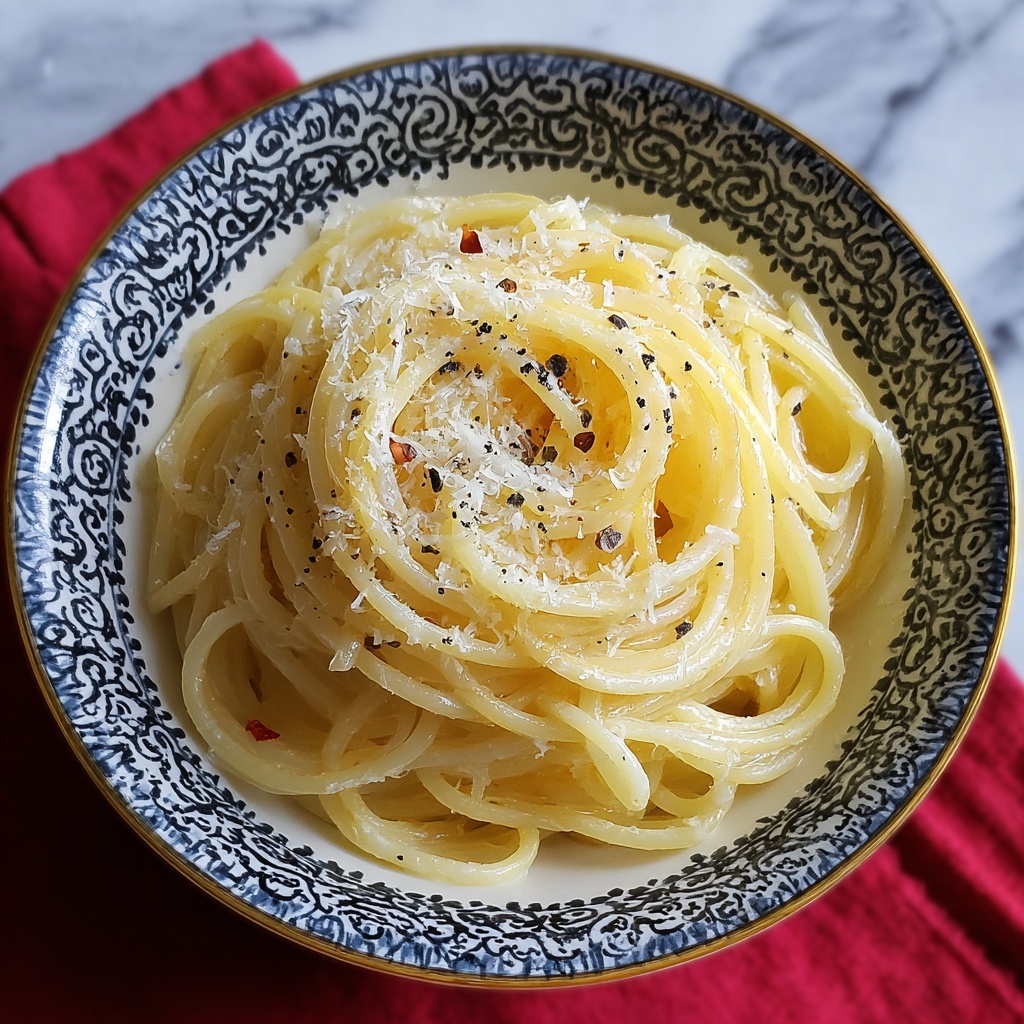
A sprinkle of finely grated Pecorino Romano and a crack of fresh black pepper on top instantly elevate your presentation and flavor profile. If you like, a few fresh parsley leaves can add a hint of color without overpowering the classic taste.
Side Dishes
This dish pairs wonderfully with lighter sides like a crisp green salad dressed simply with lemon and olive oil. Roasted vegetables or a light bruschetta also complement Spaghetti Cacio e Pepe by adding texture and freshness without stealing the show.
Creative Ways to Present
For a fun twist, try serving individual portions in shallow bowls with extra cheese and pepper arranged artistically on top. Or, toss some toasted pine nuts or chili flakes into the mix for added crunch and a subtle heat upgrade, making it uniquely yours every time.
Make Ahead and Storage
Storing Leftovers
Keep any leftover Spaghetti Cacio e Pepe in an airtight container in the refrigerator. It’s best enjoyed within a day or two since the sauce can thicken and become less creamy over time.
Freezing
We don’t recommend freezing this dish because the delicate cheese sauce tends to separate and lose its luscious texture when thawed. Fresh is definitely best for Cacio e Pepe!
Reheating
When reheating, warm gently in a skillet over low heat with a splash of water or milk to help loosen the sauce. Toss carefully to bring back its creamy consistency without drying out the pasta.
FAQs
Can I use Parmesan cheese instead of Pecorino Romano?
While Parmesan can work in a pinch, Pecorino Romano provides that signature salty, tangy bite essential to authentic Cacio e Pepe. Using Pecorino gives the dish its distinctive depth and character.
Is it important to toast the black pepper?
Toasting the pepper is a step you don’t want to skip. It amplifies its aroma and flavor, making a noticeable difference in the final dish. It’s a small effort with a big payoff.
Can I make this recipe vegan or dairy-free?
This traditional recipe relies heavily on Pecorino Romano cheese for its signature flavor and texture, so making it vegan means substituting with alternative cheeses or creamy ingredients. However, it won’t have the exact same taste and texture.
What’s the best pasta to use for Cacio e Pepe?
Classic spaghetti is ideal because its long, thin strands hold the sauce beautifully. You can also try tonnarelli or bucatini if you want a slightly different texture but stick to pasta without ridges for the best sauce cling.
How can I ensure my sauce doesn’t clump or become grainy?
Using hot pasta water and adding cheese gradually while stirring constantly helps the cheese melt smoothly to create a creamy sauce. Avoid adding cheese to cold pasta or water to prevent clumping.
Final Thoughts
This Spaghetti Cacio e Pepe Recipe is a wonderful testament to how a few simple ingredients, used thoughtfully, can create something truly spectacular. I can’t recommend it enough for when you want a comforting, flavorful meal ready in under 20 minutes. Give it a try—you might just find a new favorite that’s as quick as it is delicious!
Print
Spaghetti Cacio e Pepe Recipe
- Prep Time: 5 minutes
- Cook Time: 15 minutes
- Total Time: 20 minutes
- Yield: 2 servings
- Category: Main Course
- Method: Stovetop
- Cuisine: Italian
- Diet: Vegetarian
Description
Spaghetti Cacio e Pepe is a classic Roman pasta dish that combines the simplicity of Pecorino Romano cheese and freshly ground black pepper with perfectly cooked spaghetti. This quick and comforting recipe creates a creamy, flavorful sauce from just a few ingredients, making it an ideal choice for a delicious meal in under 20 minutes.
Ingredients
Pasta
- 12 oz spaghetti
- Salt, for boiling water
Sauce
- 1 cup Pecorino Romano cheese, finely grated
- 1 ½ tsp freshly ground black pepper
- 1 tbsp unsalted butter (optional)
Instructions
- Cook the Pasta – Bring a large pot of salted water to a boil. Cook the spaghetti until just shy of al dente, about 1 minute less than package instructions. Reserve 1 cup of pasta water before draining the pasta.
- Toast the Pepper – In a large skillet over medium heat, toast the freshly ground black pepper for about 1 minute until it becomes fragrant, enhancing its aroma and flavor.
- Create the Base – Add ½ cup of the reserved pasta water to the skillet with the toasted pepper, and bring it to a gentle simmer to meld the flavors.
- Combine Pasta and Sauce – Reduce heat to low and add the drained spaghetti to the skillet. Toss the pasta thoroughly in the pepper-infused water to start building the sauce.
- Melt the Cheese – Gradually sprinkle the finely grated Pecorino Romano cheese over the pasta while continuously stirring to prevent clumping. Add more reserved pasta water as needed to create a creamy, smooth sauce that clings to the spaghetti.
- Enhance (Optional) – For added creaminess, stir in 1 tablespoon of unsalted butter until melted and fully incorporated into the sauce.
- Finish and Serve – Continue tossing the pasta until the sauce is smooth and evenly coats each strand. Serve immediately with extra Pecorino Romano cheese and additional black pepper if desired.
Notes
- Reserving pasta water is crucial as its starch content helps create a creamy sauce without cream.
- Use freshly ground black pepper for the best flavor impact.
- Grate Pecorino Romano cheese finely to help it melt smoothly into the sauce.
- If you prefer a milder pepper taste, adjust the amount accordingly.
- Butter is optional but adds richness and a silkier texture to the sauce.
- Serve immediately as the sauce is best enjoyed fresh.