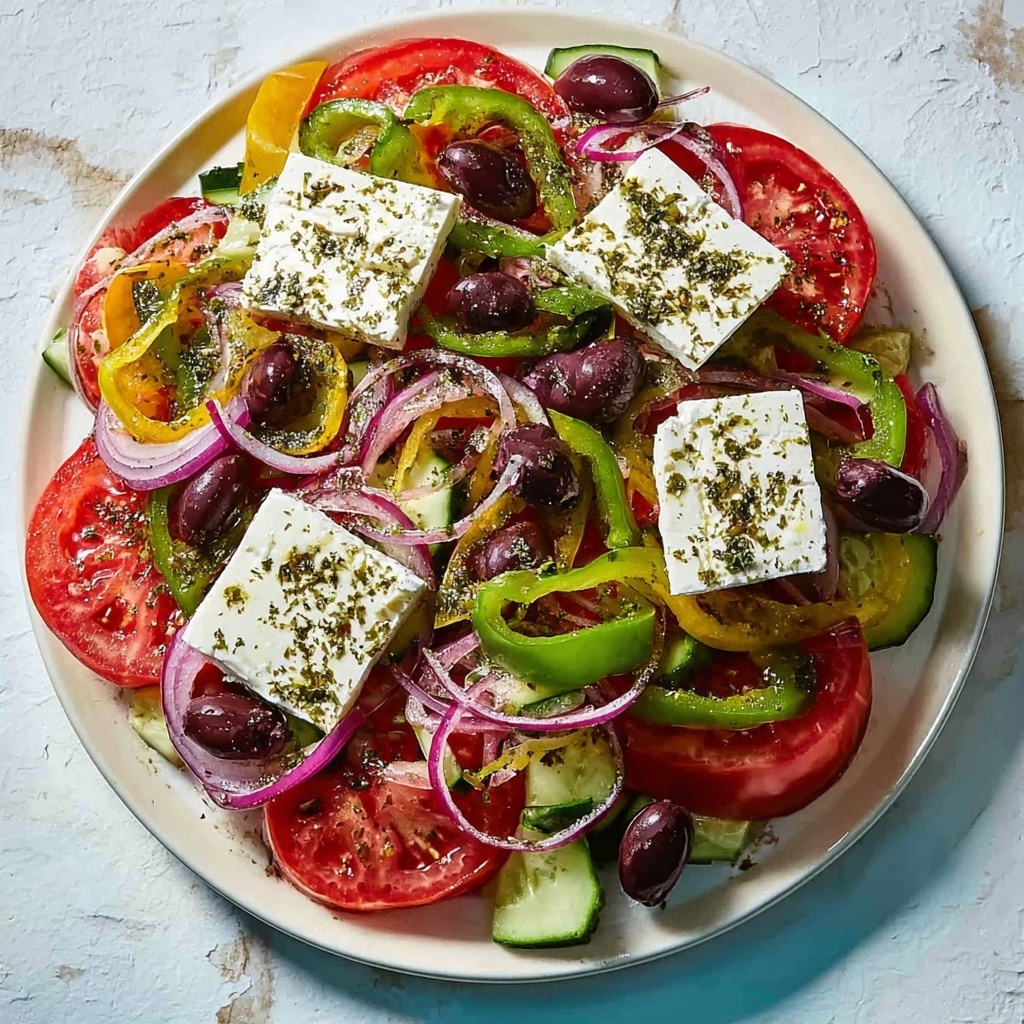
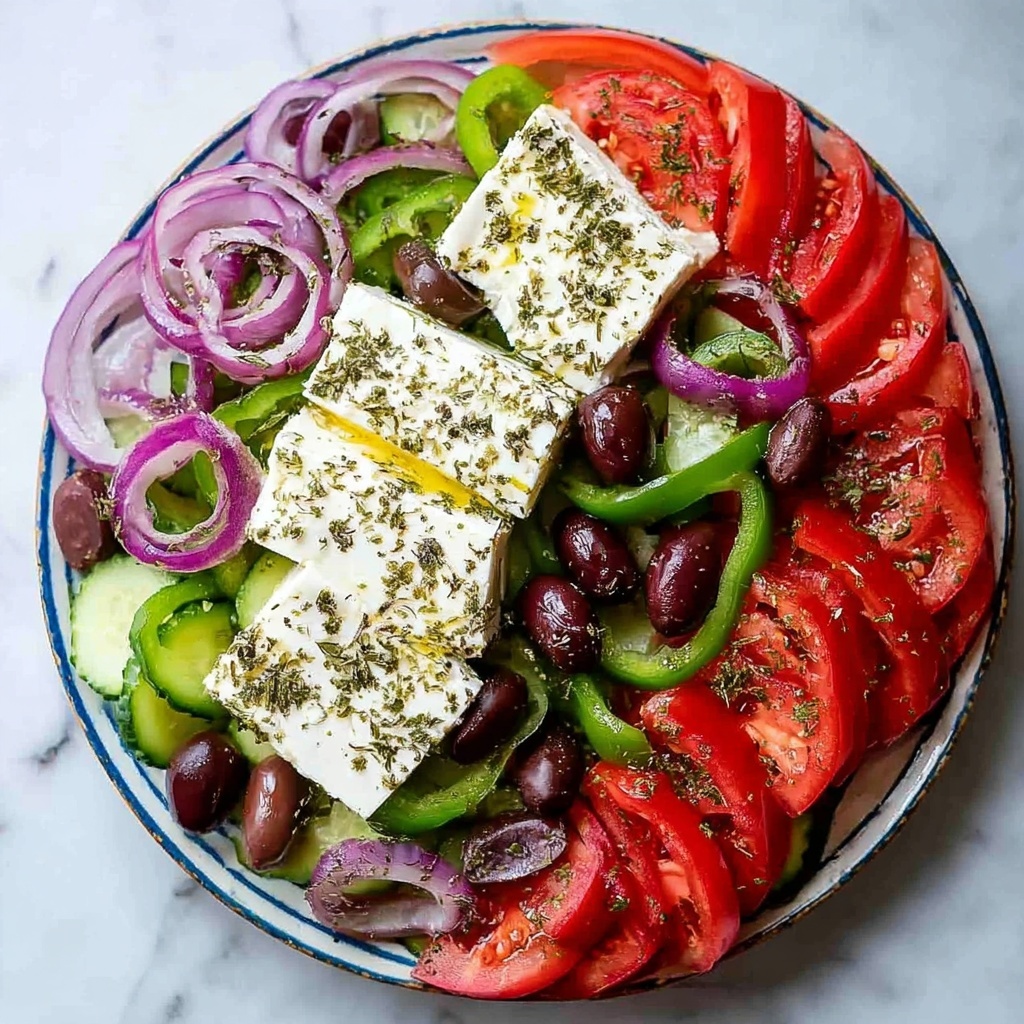
If you are craving a fresh, vibrant dish that bursts with Mediterranean flavors, this Classic Greek Salad Recipe is an absolute winner. It’s a colorful mix of crisp cucumbers, juicy tomatoes, briny Kalamata olives, and tangy feta cheese, all brought together by a simple yet flavorful dressing. This salad is not just a side dish—it’s a celebration of wholesome ingredients that deliver wonderful textures and tastes in every bite. Whether you’re serving it alongside grilled meats or enjoying it as a light meal itself, this Classic Greek Salad Recipe is destined to become a favorite in your kitchen.
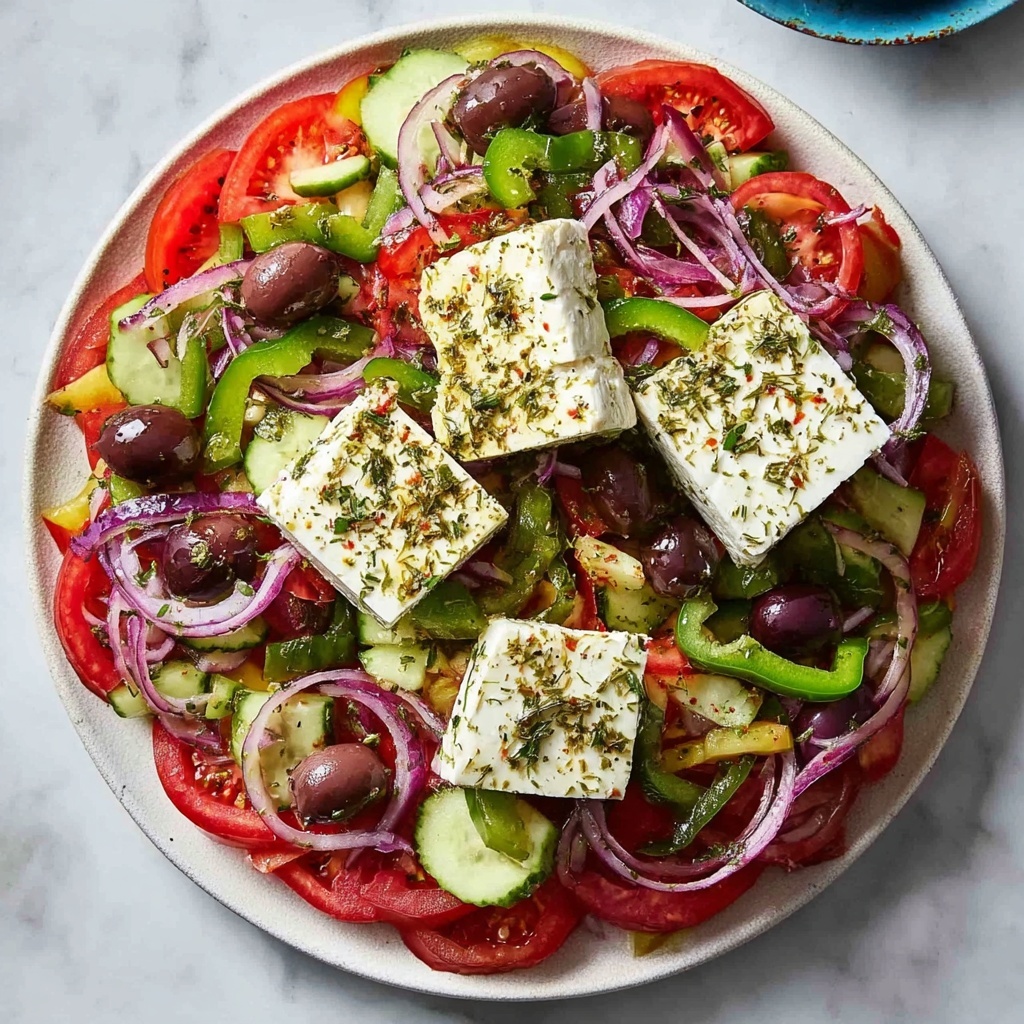
Ingredients You’ll Need
Every ingredient in this Classic Greek Salad Recipe plays a vital role, blending freshness, saltiness, and a hint of acidity, making the preparation delightfully simple but incredibly tasty. Each component adds its own character, creating a perfect harmony of color, texture, and flavor.
- 3 cups chopped Roma tomatoes or cherry tomatoes: Choose ripe, juicy tomatoes to ensure sweet and tangy bursts in every forkful.
- 1 cucumber (sliced into half-moons): Adds a refreshing crunch that cools the palate.
- 1 small red onion (thinly sliced): Provides a sharp, slightly sweet bite that contrasts beautifully with the vegetables.
- 1 green bell pepper (sliced): Offers subtle sweetness and crispness to balance the salad.
- ½ cup Kalamata olives: Contributes a deep, briny flavor that gives the salad its authentic Greek edge.
- ¾ cup feta cheese (cut into cubes or crumbled): Brings creaminess and a savory tang that binds the ingredients together.
- 2 tablespoons extra-virgin olive oil: Ensures a rich, smooth finish and acts as the flavorful dressing base.
- 1 tablespoon red wine vinegar: Adds a light acidity that brightens the entire dish.
- 1 teaspoon dried oregano: A classic Greek herb that infuses the salad with aromatic warmth.
- Salt and black pepper to taste: Essential for balancing and enhancing all the natural flavors.
- Optional: lemon wedges for serving: For an extra touch of zesty freshness if you like.
How to Make Classic Greek Salad Recipe
Step 1: Prepare the Vegetables
Start by washing and chopping the Roma tomatoes or halving the cherry tomatoes, slicing the cucumber into half-moons, thinly slicing the red onion, and cutting the green bell pepper into strips. This prep work is quick but crucial—it ensures each bite delivers the right balance of freshness and texture that makes the Classic Greek Salad Recipe so delightful.
Step 2: Combine the Fresh Ingredients
In a large bowl, toss together the chopped tomatoes, cucumbers, red onions, green bell pepper slices, and Kalamata olives. This colorful medley is what sets the stage for the layers of flavor that the salad is known for.
Step 3: Add the Feta Cheese
Scatter the feta cheese cubes or crumble over the top of the mixed vegetables. The creamy, slightly salty feta naturally complements the other ingredients, lending the signature character that you expect from a Classic Greek Salad Recipe.
Step 4: Whisk the Dressing
In a small bowl or jar, whisk together extra-virgin olive oil, red wine vinegar, dried oregano, salt, and black pepper until well combined. This simple dressing is the magic touch that binds the salad and highlights the fresh flavors with a slight tang and herbaceous note.
Step 5: Dress and Toss
Drizzle the dressing evenly over the salad and toss gently to combine. Be careful not to break up the feta too much; you want those creamy chunks that add bursts of flavor with every bite. You can serve the salad immediately or refrigerate it for up to an hour to let the flavors mingle beautifully.
How to Serve Classic Greek Salad Recipe
Garnishes
While the salad naturally stands out on its own, adding lemon wedges for squeezing right before eating elevates the freshness remarkably. You can also sprinkle some fresh chopped parsley or a dash of freshly ground black pepper on top for an extra layer of aromatic appeal.
Side Dishes
This salad pairs wonderfully with grilled chicken, lamb, or seafood, bringing a vibrant, crisp contrast to hearty proteins. It also works beautifully alongside warm pita bread or as a refreshing starter for a Mediterranean meal.
Creative Ways to Present
For a fun twist or a party presentation, serve the Classic Greek Salad Recipe in individual small bowls or hollowed-out bell peppers. You might also layer the ingredients in clear glass containers for a stunning visual that shows off the salad’s vibrant colors.
Make Ahead and Storage
Storing Leftovers
If you have leftovers, store the Classic Greek Salad Recipe in an airtight container in the refrigerator. Keep the dressing separate if possible to preserve the crisp textures. Consume within a day for the best taste and texture.
Freezing
Freezing the salad is not recommended. The fresh vegetables, olives, and feta will lose their texture and flavor, resulting in a mushy, less appetizing dish once thawed.
Reheating
This salad is best enjoyed cold or at room temperature. Reheating is not necessary and will diminish the fresh textures and flavors that make the Classic Greek Salad Recipe so wonderful.
FAQs
Can I add lettuce to the Classic Greek Salad Recipe?
Traditional Greek salad does not include lettuce, focusing instead on fresh vegetables like tomatoes, cucumbers, and peppers. However, if you prefer a bit of extra crunch or bulk, you can add chopped romaine or mixed greens without losing too much authenticity.
What type of feta cheese should I use?
For the best flavor, opt for authentic Greek feta cheese made from sheep’s milk or a blend with goat’s milk. It tends to be creamier and tangier than the standard varieties found in some supermarkets.
Is this salad suitable for vegetarians and gluten-free diets?
Absolutely! The Classic Greek Salad Recipe is naturally vegetarian and gluten-free, making it a great choice for those with dietary restrictions or anyone looking for a healthy, satisfying salad.
Can I add protein to make this a main dish?
Yes! Adding grilled chicken, shrimp, or even chickpeas boosts the protein content and turns the salad into a wholesome main course that’s still light and refreshing.
How long can I refrigerate the salad before serving?
It’s best to enjoy the salad within an hour or so after preparation to maintain the crispness of the vegetables and the freshness of the feta. If you need to prepare it earlier, keep the dressing separate and toss everything together just before serving.
Final Thoughts
I can’t recommend this Classic Greek Salad Recipe enough for those moments when you want something simple, fresh, and bursting with flavor. It’s incredibly easy to prepare, uses wholesome ingredients, and offers that perfect balance of textures and tastes that keeps you coming back for more. Whip this up anytime you want a little Mediterranean sunshine on your plate—you’ll be so glad you did!
Print
Classic Greek Salad Recipe
- Prep Time: 10 minutes
- Cook Time: 0 minutes
- Total Time: 10 minutes
- Yield: 4 servings
- Category: Salad, Side Dish
- Method: No-Cook
- Cuisine: Greek, Mediterranean
- Diet: Vegetarian, Gluten Free
Description
A classic Greek salad featuring fresh tomatoes, cucumber, bell pepper, red onion, Kalamata olives, and creamy feta cheese, all tossed in a simple oregano-infused olive oil and red wine vinegar dressing. This refreshing, no-cook salad is perfect as a light side dish or a vegetarian main, embodying the vibrant flavors of Mediterranean cuisine.
Ingredients
Vegetables & Olives
- 3 cups chopped Roma tomatoes or cherry tomatoes (halved)
- 1 cucumber (sliced into half-moons)
- 1 small red onion (thinly sliced)
- 1 green bell pepper (sliced)
- ½ cup Kalamata olives
Cheese
- ¾ cup feta cheese (cut into cubes or crumbled)
Dressing
- 2 tablespoons extra-virgin olive oil
- 1 tablespoon red wine vinegar
- 1 teaspoon dried oregano
- Salt and black pepper to taste
Optional
- Lemon wedges for serving
Instructions
- Combine Vegetables and Olives: In a large bowl, mix together the chopped tomatoes, sliced cucumber, thinly sliced red onion, green bell pepper slices, and Kalamata olives until evenly distributed.
- Add Feta Cheese: Scatter the cubed or crumbled feta cheese over the top of the vegetable and olive mixture, preserving its texture and flavor.
- Prepare Dressing: In a small bowl or jar, whisk together the extra-virgin olive oil, red wine vinegar, dried oregano, salt, and black pepper until fully emulsified.
- Dress the Salad: Drizzle the prepared dressing evenly over the salad components, then gently toss everything together to combine without breaking up the feta cheese.
- Serve or Chill: Serve the salad immediately for the freshest taste, or refrigerate it for up to 1 hour to allow the flavors to meld. Optionally, garnish with lemon wedges for additional brightness.
Notes
- This salad is traditionally served without lettuce to highlight the fresh vegetables and cheese.
- For added protein, consider topping with grilled chicken or chickpeas.
- Use high-quality extra-virgin olive oil and authentic feta cheese to enhance flavor authenticity.